Every business owner aspires to have their website rank highly on Google’s first page. A high ranking increases traffic, visibility, and eventually sales. The catch is that Google does not assign rankings arbitrarily.
It can be annoying not to appear in search results, whether you are managing an online store, providing professional services, or offering Amazon Listing Services. Even after creating a website, spending money on content, and possibly running advertisements, your site still doesn’t move up the search results page.
The good news? This is happening for specific reasons, and you’re not the only one. We’ll look at the seven main causes of your poor Google ranking in this post, along with solutions.
1. Your Keyword Strategy Is Weak
Google won’t show your content if it doesn’t match what people are looking for. Many companies target terms that are too general, such as “product optimization” or “marketing services.” These keywords are excessively competitive and frequently unrelated to your target market. A skilled search engine optimization services provider focuses on identifying the right keywords that reflect user intent and match what potential customers are actually searching for.
If you offer Amazon Listing Services, for instance, focusing just on “Amazon” won’t help because you’ll be up against millions of irrelevant searches.
How to Fix It:
Use devices such as UberSuggest, Ahrefs, or Semrush to conduct keyword research.
Pay attention to the long-tail keywords that have buyers’ intentions, such as “optimize Amazon product listing” or “Best Amazon Listing Services for Small Businesses.”
Include the keywords systematically in the image ALT texts, URL, header, meta details, and title.
Create materials that directly respond to the search words used by your audience.
A focused keyword strategy ensures you’re targeting the right audience, not wasting effort on irrelevant clicks.
2. Your On-Page SEO Is Lacking
Even the best-written content can underperform without proper adaptation. The on-page Search Engine Optimization (SEO) helps Google understand the context of your content, and if you are leaving the major elements, you are leaving the ranking on the table.
Signs of Weak On-Page SEO:
Missing or duplicate meta descriptions
No H1 tag or messy heading structure
Images without alt texts
Lack of internal linking
How to Fix It:
Write unique meta descriptions under 160 characters.
Use one H1 per page (the main title) and organize subtopics with H2s and H3s.
Add descriptive alt texts to every image, including keywords when appropriate.
Internally link related blogs and service pages (e.g., from a blog on “SEO strategies” to your Amazon Listing Services page).
Consider on-page SEO to be the cornerstone of your website. Even excellent content may go unnoticed without it, especially as ai in seo continues to shape how content is evaluated and ranked.
3. You’re Ignoring High-Quality Content
Google rewards content that is valuable, in-depth, and unique. If your website is filled with short, generic posts, or if you’ve been stuffing keywords unnaturally, your chances of ranking are slim.
Why This Matters:
Thin or duplicate content signals to Google that your site isn’t authoritative. On the other hand, detailed, problem-solving content builds trust with both search engines and readers.
How to Fix It:
Publish long-form content (1,500+ words) that addresses user intent.
Mix in case studies, step-by-step guides, and data-driven insights.
Update old blogs with fresh stats and insights.
For service businesses, create useful resources. For instance, if you offer Amazon Listing Services, publish articles like:
“How to Write Compelling Amazon Product Descriptions”
“The Role of SEO in Amazon Listings”
Becoming the industry’s go-to resource is the aim.
4. Your Website Isn’t Mobile-Friendly
With 60%+ of searches happening on mobile, Google uses mobile-first indexing. That means if your mobile site is clunky, your rankings will drop.
How to Fix It:
Choose a responsive website design that adapts to all devices.
Use Google’s Mobile-Friendly Test to identify issues.
Simplify navigation with clear menus and large clickable buttons.
Ensure mobile pages load quickly and images resize properly.
When potential clients are searching for services like Amazon Listing Services on their phones, they won’t stick around if your site isn’t user-friendly.
5. Your Website Speed Is Too Slow
Speed affects both user experience and ranking. If a website takes longer than three seconds to load, more than half of its visitors will leave.
How to Fix It:
Compress large image files.
Use browser caching and enable lazy loading.
Switch to a faster, reliable hosting service.
Use tools like GTmetrix or Google PageSpeed Insights for diagnostics.
For service businesses, site speed signals professionalism. Imagine a client looking for Amazon Listing Services—if your site lags, they’ll assume your services are equally slow.
6. You Have Weak Backlink Profiles
Backlinks act as votes of credibility. If authoritative sites aren’t linking to you, Google won’t see your site as trustworthy. Many websites struggle here because they either ignore link building or focus on low-quality links.
How to Fix It:
Write guest blogs for high-authority websites in your niche.
Create shareable content like infographics, industry studies, or guides.
Build relationships with bloggers, journalists, and niche influencers.
Use directories or marketplaces relevant to your industry (e.g., e-commerce and digital marketing sites linking to your Amazon Listing Services page).
Ignoring local SEO is a lost opportunity if your company caters to particular areas. Local searches, like “Amazon listing services in Delhi,” are very focused and frequently result in sales.
How to Fix It:
Set up and optimize your Google Business Profile with correct details.
Encourage satisfied clients to leave reviews.
Use local keywords in your content and meta tags.
List your business in local directories and industry-specific platforms.
Local SEO isn’t just for brick-and-mortar shops—it’s equally valuable for service providers who cater to specific regions.
Additional Tips for Climbing Google Rankings
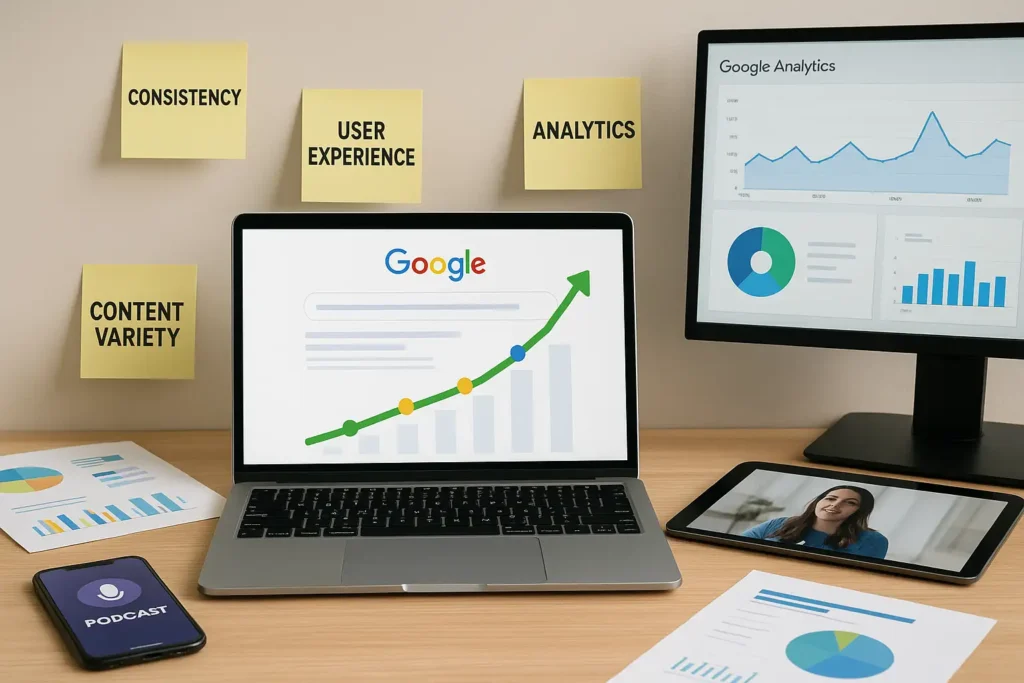
Consistency Matters: SEO is a continuous process rather than a one-time event.
User Experience Counts: Enhance the design, readability, and navigation of the website.
Analytics Are Essential: To improve tactics, monitor results using Google Analytics and Search Console.
Content Variety Helps: Incorporate infographics, podcasts, and videos into your blog posts.
When combined, these strategies make your site stronger in Google’s eyes.
Final Thoughts
Building long-term authority and trust is more important for Google ranking than using shortcuts or tricks. Your website will be well-positioned for success if you take care of these seven major problems: poor on-page SEO, thin content, mobile issues, slow speed, weak backlinks, and neglected local SEO. Partnering with a white-label SEO agency can also help businesses effectively address these issues and maintain consistent search performance.
The advantages are enormous for companies such as those that provide Amazon Listing Services. Increased visibility, more qualified leads, and more conversions are all results of optimized rankings. You can invest in long-term, sustainable growth by making the appropriate adjustments now.
FAQs About Ranking on Google
1. How long does it take to get a Google ranking?
Depending on the competition and your SEO efforts, it usually takes three to six months to see noticeable ranking improvements.
2. Do backlinks actually help me rank?
Indeed. The credibility of your website is increased by backlinks from reliable websites, which serve as endorsements.
3. Can SEO be replaced by paid advertisements?
No. Ads can increase traffic right away, but they stop when your budget runs out. Long-term organic growth is achieved through SEO.
4. What impact does content length have on rankings?
Because it covers topics in detail and keeps readers interested, longer content (more than 1,500 words) usually performs better.
5. Will my business benefit from mobile optimization?
Of course. A mobile-friendly website enhances user experience and rankings because the majority of users browse on mobile devices.
6. How do Amazon Listing Services connect with SEO?
Just like Google SEO, Amazon uses algorithms to rank products. Optimized product titles, keywords, and descriptions improve visibility—making Amazon Listing Services vital for sellers who want to dominate search results on the world’s largest marketplace.
In the age of online shopping, Amazon has changed how we purchase and share goods. Whether you are creating a wedding registry, planning a group purchase, or compiling suggested products for your audience, the ability to share lists from Amazon is a huge benefit. In just a few clicks, you can create, customize, and share lists specific to your intentions, making for easy shopping for people involved. This blog will show you the steps to share your Amazon list, the benefits of creating lists and sharing them, and the ways Amazon listing services can enhance your experience, especially as a seller or influencer. Let’s get started!
Why Use Amazon’s List-Sharing Feature?
Before we get into the step-by-step, let’s first discuss why it is valuable to share an Amazon list:
Gift Registries: Great for baby showers, weddings, birthdays, and more – you get what you want instead of another candle!
Group Shopping: You can share a list with family, friends, or coworkers to plan a group purchase for an event or shared need.
Influencer Opportunities: Content creators can share product lists to entertain their audience or to drive affiliate revenues.
Personal Organization: It can serve as a way to keep track of what you need to buy, and a way to share with others to gain insight.
Business Purposes: If you are a seller using an Amazon listing service, you can use a professionally created list to share with your customers or business partners.
Overall, sharing a list will save time, resolve confusion, and make sure everyone is on the same page. It always makes things easy!
Step-by-Step Guide to Sharing an Amazon List
Amazon’s intuitive platform makes creating and sharing lists a breeze, whether you’re using the website or mobile app. Follow these steps to share your list in just a few clicks.
Step 1: Log In to Your Amazon Account
To begin, you’ll need an active Amazon account:
Access Amazon: Open Amazon.com in your browser or launch the Amazon mobile app.
Sign In: Click “Account & Lists” (top-right corner on the website or in the app menu) and log in. If you don’t have an account, choose “Create your Amazon account” and comply with the prompts to set one up.
Step 2: Navigate to Your Lists
Once logged in, access your lists:
On the Website:
Hover over “Account & Lists” in the top-right corner.
Click “Your Lists” to view existing lists or create a new one.
On the Mobile App:
Tap the menu icon (three horizontal lines) inside the bottom-proper nook.
Select “Your Lists” to access your lists.
Step 3: Create a New List (If Necessary)
If you don’t have a list yet, here’s how to create one:
Click “Create a List”: On the Lists page, find the “Create a List” button (on the website, it’s typically on the right; on the app, it’s at the top).
Name Your List: Choose a clear name, like “Birthday Wish List,” “Office Supplies,” or “Holiday Gift Guide.”
Select List Type: Choose between a Shopping List (for personal use) or a Wish List/Registry (for sharing).
Save: Click “Create List” to finalize. Your listing will now appear below “Your Lists.”
Step 4: Add Products to Your List
A list needs items to be useful! Here’s how to populate it:
Search for Items: Use Amazon’s search bar to find products you want to include.
Add to List:
On the product page, find the “Add to List” button (typically below “Add to Cart”).
Select your desired list from the dropdown menu.
Repeat: Add as many items as needed. You can later organize items by adding notes or setting priorities.
Pro Tip: For sellers or influencers using Amazon listing services, ensure your products have optimized titles, images, and descriptions to make your listing more appealing and professional.
Step 5: Adjust List Settings
Before sharing, customize your list’s privacy and settings:
Access Settings:
On the Lists page, click the three dots (…) next to your list and select “Manage List.”
Set Privacy:
Private: Only you can view and edit.
Shared: Only people with the link can view or edit (primarily based on your permissions).
Public: Anyone with the link can view, perfect for registries or influencer lists.
Add Details (optional):
Include a description, recipient name, or shipping address for registries.
Enable “Allow others to contribute” for collaborative lists.
Save: Click “Save Changes” to update.
Step 6: Share Your List
Now, it’s time to share your list:
On the Website:
Go to “Your Lists” and select your list.
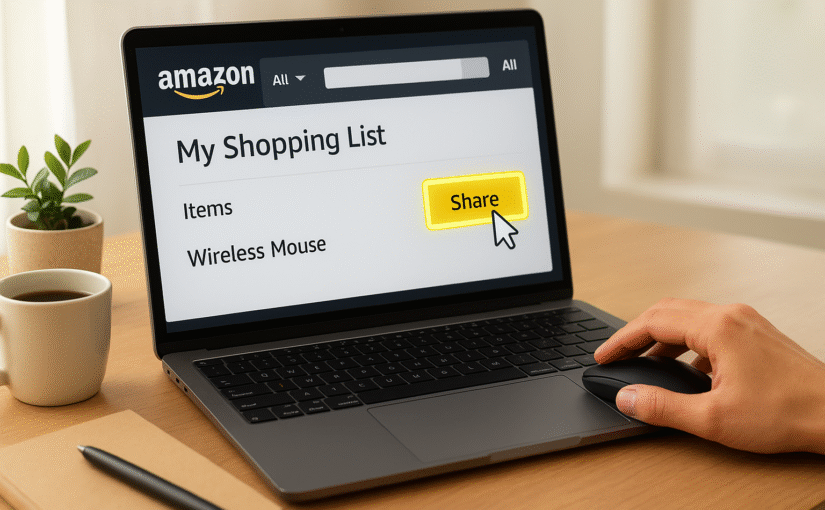
Click the “Send list to others” button (often a paper airplane or “Share” icon).
Choose your sharing method:
Copy Link: Copy the URL to share via electronic mail, text, or social media.
Invite by Email: Enter email addresses to send the list directly.
For public lists, share the link on platforms like X, Facebook, or Instagram.
On the Mobile App:
Open your list, tap the share icon (a box with an arrow), and choose your preferred method (e.g., text, email, or social apps).
Pro Tip: Businesses using Amazon listing services can embed list links in blogs, websites, or newsletters to drive traffic and conversions.
Step 7: Manage Your List Post-Sharing
After sharing, you can monitor and update your list:
Track Purchases: For registries, Amazon shows purchased items without revealing buyer details (unless they opt to share).
Edit as Needed: Add/remove items, adjust privacy, or update details.
Send Thank-Yous: Use the “Thank You List” feature for registries to send gratitude to buyers.
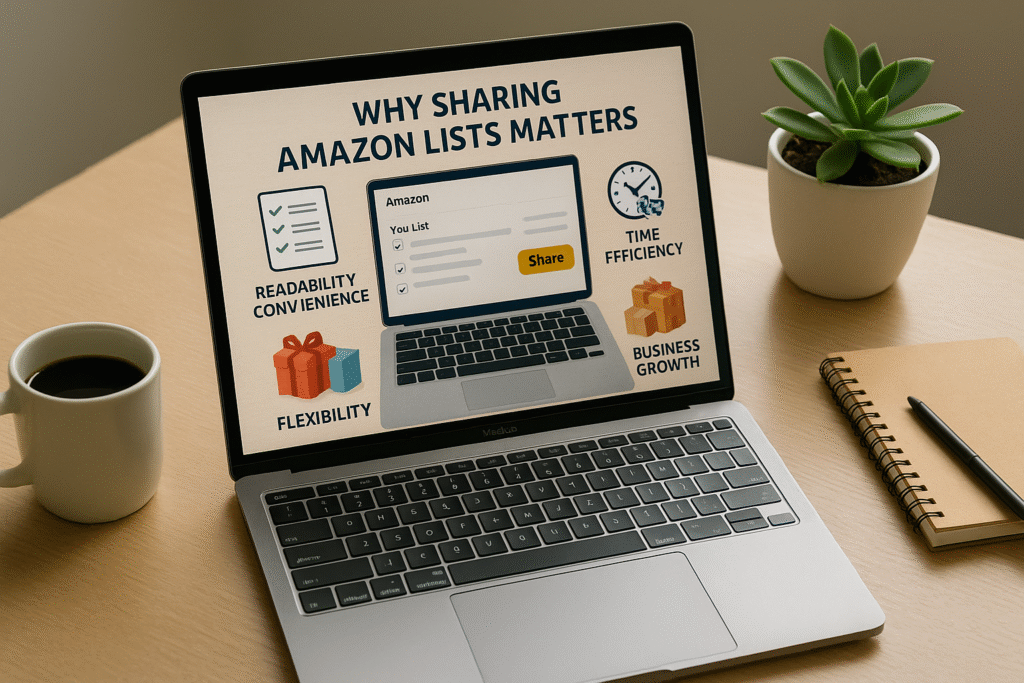
Why Sharing Amazon Lists Matters
Sharing an Amazon list offers numerous advantages for personal and professional use:
Readability and Convenience: Removes ambiguity by conveying exactly what you need to others.
Time Efficiency: Users are able to shop directly from your list, which saves time.
Flexibility: Lists are valuable for personal wish lists, group gifts, or business product exhibits.
Global Reach: Amazon’s global platform means that your list is visible to people globally.
Business Growth: Sellers using Amazon listing services can use lists to promote their products, increasing visibility and potential sales.
Elevating Lists with Amazon Listing Services
For sellers, influencers, or businesses, Amazon listing services can enhance the way you share lists. Amazon listing services create and optimize product listings to help you stand out among competing product listings in the Amazon marketplace. This is how listing services improve your lists:
Professional Listings: Many of these services will shoot a professional photo, use an attention-getting title, and create a compelling description, which can make your listings look more professional.
SEO Optimization: By using relevant keywords (such as “Amazon listing services”), your products rank higher in search engine results, which directs traffic to your list.
Enhanced Visuals: Create more engaging A+ content or enhanced brand content to really make your listed products pop!
Performance Tracking: Some platforms provide you with analytics to evaluate the performance of your shared lists to give you an opportunity to improve your strategy.
Affiliate Potential: Influencers can share lists with affiliate links for potential commissions for the sales they generate.
Partnering with an Amazon listing service provider ensures your lists are professional, optimized, and effective for driving sales.
Tips for Creating Impactful Amazon Lists
To maximize your list’s effectiveness, consider these tips:
Use Descriptive Names: Make your list’s purpose clear (e.g., “Baby Shower Registry” or “Camping Gear”).
Include Variety: Add items across price ranges to suit different budgets.
Keep It Fresh: Regularly update your list to remove unavailable items or add new ones.
Optimize for Sellers: Use high-quality visuals and descriptions if you’re showcasing products.
Promote Smartly: Share your list on X, email campaigns, or your website to reach a broader audience.
Conclusion
Sharing an Amazon list offers an easy and effective way to simplify shopping, coordinate with other people, or market products. Whether it’s to create a gift registry, facilitate a group buy, or showcase products as a seller, sharing an Amazon list is quick and simple with this unique service. Utilizing Amazon listing services, sellers and influencers are able to optimize their lists for the best results in their own shops, and to help drive engagement and sales. Follow the steps I presented above, and you’ll be sharing lists in minutes!
Frequently Asked Questions
Can I percentage my list with precise humans most effective?
Yes. Set the list to Shared and send the link only to the people you want to share it with.
Can I see who buys items from my list?
For registries, Amazon’s “Thank You List” shows purchased items and allows thank-you notes. For other lists, tracking is limited unless using Amazon listing services with analytics.
Is there a limit to list items?
No strict limit exists, but keep lists manageable (e.g., 20–50 items) for ease of use.
Can I share lists internationally?
Yes, as long as recipients can access Amazon in their region. Check product shipping restrictions.
Accessible opportunities for selling on Amazon in 2025 are almost limitless for sellers. With Amazon’s 40% share in e-commerce, more than 2.4 million active sellers are already utilizing the platform. Access to such a wide base, however, comes with stiff competition and requires meticulous listing optimization, strategic planning, and deep understanding of Amazon’s changing policies. This guide offers hands-on strategies to help sellers focused on listing optimization services succeed as they target listing conversions in 2025. These strategies will set up for a profitable Amazon business and help sidestep common mistakes.
Why Sell on Amazon in 2025?
Due to its infrastructure, brand value, and recognition, Amazon becomes a preferable platform for both seasoned and novice sellers. Like most e-commerce utilities, Amazon has a plethora of benefits. Let’s look at some of them.
Wider Reach: The exposure received by Amazon due to their marketing sends over a million people to their platform every day. This hits bare minimum for exposure.
Brand Image: The items ordered on Amazon are usually delivered on time and in good condition. Amazon has attached a brand image, and buyers are usually more than willing to purchase.
Other Services: Enable sellers to ship their products using Prime by dealing with customer queries FBA; By putting the focus on sales, all return dealing is covered by FBA.
Extra Resources: Amazon has advertising and FBA listing. With the help of technologies, Amazon makes sure to provide the resources for all streamlining processes.
Even though these resources are helpful, the tight competition makes it more and more difficult to navigate the market. Changes involving the issuance of new product titles for all items listed in the market must be a greater focus with regard to the policy structure.
Step-by-Step Guide to Start Selling on Amazon in 2025
1. Conduct Thorough Market Research
Before listing products, studies market traits and patron calls for. Use gear like Jungle Scout’s Product Database or Amazon’s Best Sellers Rank (BSR) to identify high-call for, low-competition niches. Focus on merchandise with a BSR underneath 50,000 for better sales potential. Ensure your products comply with Amazon’s constrained categories, including rings or collectibles, to keep away from listing problems.
Tip: Avoid oversaturated markets until you can provide a unique cost proposition, along with improved satisfaction or branding.
2. Choose the Right Selling Plan
Amazon offers two plans:
Individual Plan: Costs $0.99 per sale, ideal for sellers with fewer than 40 monthly sales.
Professional Plan: Costs $39.99/month, providing access to advanced tools like bulk listings, advertising, and analytics.
For serious sellers, the Professional Plan is worth the investment due to its scalability and access to features like Amazon Brand Registry.
3. Set Up Your Amazon Seller Account
Register on Amazon Seller Central together with your commercial enterprise call, deal with, tax identity number, and bank account information. For international dealers, do not forget forming a U.S. LLC and acquiring an EIN for tax compliance. Amazon’s verification method takes about three days, so use this time to explore Seller Central’s webinars and courses.
4. Select a Fulfillment Method
Choose between:
Fulfillment by Amazon (FBA): Amazon handles storage, shipping, and customer service. Ideal for scalability and Prime eligibility, but fees apply.
Fulfillment by Merchant (FBM): You manage inventory and shipping, offering more control but requiring robust logistics.
FBA is recommended for beginners due to its convenience and customer trust, especially for international sellers leveraging Amazon’s logistics network.
5. Optimize Product Listings with Amazon Listing Services
Your product list is your digital storefront. Amazon listing services, inclusive of the ones provided by means of Jungle Scout, Feedonomics, or My Amazon Guy, assist create compliant, high-changing listings. Here’s a way to optimize key elements:
Product Titles
Amazon’s 2025 identify necessities restriction titles to 200 characters, limit special characters (e.G., !, $, ?), and restriction key-word repetition to two times, except for prepositions and articles. Use a established components:
Brand + Product Type + Key Features + Size/Quantity
Example: “JUNGLE CREATIONS Washable Pee Pads for Dogs, 30” x 36” (4-Pack), Waterproof Potty Training Mats for Puppies”
This uses 186 characters, includes primary keywords, and highlights benefits like “washable” and “waterproof.”
Bullet Points
Use all five bullet points to highlight benefits, not just features. Keep them concise, incorporate keywords, and avoid promotional phrases like “on sale.” Example:
Leak-Proof Design: Ensures floors stay clean during potty training.
Reusable & Washable: Saves money compared to disposable pads.
Product Descriptions
Write clear, engaging descriptions (up to 2,000 characters) that address customer pain points and include keywords naturally. Use HTML formatting or A+ Content for readability. Professional Amazon listing services can refine descriptions to boost conversions.
Images
Use high-quality images (minimum 1,000 x 1,000 pixels) with a white background. Include lifestyle images showing the product in use and close-ups of unique features. Professional photography services can enhance appeal.
Backend Keywords
Add relevant keywords in Seller Central’s backend to improve searchability without cluttering the visible listing.
6. Leverage Amazon’s AI Tools
Amazon’s generative AI list tools, used by over 100,000 dealers, simplify developing optimized titles, bullet factors, and outlines. These equipment examine consumer search traits to signify excessive-appearing keywords, saving time and enhancing search engine optimization.
7. Price Competitively
Amazon’s generative AI listing tools, utilized by over a hundred,000 sellers, simplify developing optimized titles, bullet points, and descriptions. These tools examine patron seek trends to indicate excessive-acting key phrases, saving time and enhancing search engine marketing.
8. Launch with Amazon PPC
Drive early sales with Amazon’s Pay-Per-Click (PPC) marketing. Target applicable keywords and create compelling advert copy to attract clicks. Monitor campaigns weekly to optimize bids and pause underperforming advertisements.
9. Manage Inventory and Reviews
Maintain lean stock to keep away from long-term garage prices (carried out to inventory older than 26 weeks in 2025). Use tools like Seller Labs’ Restock App for information-driven restocking. Request reviews inside 30 days of buying the usage of automated gear like Jungle Scout Review Automation; however, avoid incentives to stay compliant.
10. Monitor Performance and Scale
Track metrics like conversion prices, Order Defect Rate (ODR), and consumer feedback through Seller Central’s Account Health dashboard. A/B check list elements to optimize performance. Expand into international markets just like the EU using Amazon Global Selling and Pan-European FBA for boom.
The Role of Amazon Listing Services
Professional Amazon listing services are invaluable for beginners and established sellers. Agencies like Feedonomics, My Amazon Guy, or Seller Labs offer:
SEO Optimization: Research high-performing keywords to boost search visibility.
Conversion Focus: Craft compelling titles, bullet points, and descriptions to drive sales.
Time Savings: Automate listing creation and management, allowing you to focus on strategy.
For instance, Feedonomics ensures titles stay under a hundred and fifty characters for ideal performance, even as My Amazon Guy provides catalog control to align listings with your logo desires. These offerings are especially useful for navigating new policies, including the January 21, 2025, title requirements.
Common Mistakes to Avoid
Keyword Stuffing: Overloading titles with keywords reduces readability and risks penalties.
Ignoring Compliance: Non-compliant listings may be rewritten by Amazon, harming visibility.
Neglecting Customer Service: Poor response times or inaccurate listings lead to negative reviews.
Overstocking: Excess inventory incurs high storage fees under 2025’s tightened rules.
Conclusion
Starting an Amazon business in 2025 calls for strategic planning, from product research to listing optimization. By leveraging Amazon listing services, deciding on the proper achievement method, and staying compliant with Amazon’s rules, you may build a profitable, scalable commercial enterprise. Monitor performance, adapt to trends, and use Amazon’s gear to live in advance of the competition. With determination and the right strategies, 2025 may be your 12 months to thrive on Amazon. Sources:
Forbes Advisor: How to Sell on Amazon
Jungle Scout: Amazon Listing Optimization Guide
My Amazon Guy: 2025 Amazon Product Title Requirements
Carbon6: New Amazon Product Title Requirements for 2025
Seller Labs: Beginner’s Guide to Selling on Amazon
The rapid development of Q-commerce has shifted the e-commerce landscape, especially in high-velocity regions such as India. Meeting the needs of burnt-out urban consumers, Q-commerce or delivery e-commerce has become a linchpin of retail logic.
The rapid delivery of goods from sellers’ locations in tantalizingly short intervals of 10 minutes to 30 minutes has transformed consumer behavior. For e-commerce sellers, adapting to hyper-fast delivery infrastructure by 2025 is not a choice but a minimum threshold of competitiveness in the industry.
Powered by insights from market movers and trends, this article hypothesizes practical solutions for e-commerce sellers to capitalize on Q-commerce utilizing Amazon’s for-hours as a case study and providing recommendations for optimized operations and guaranteed success.
Understanding Quick Commerce in 2025
Quick trade, or q-commerce, is an evolution of traditional e-commerce that prioritizes ultra-speedy shipping of essentials, commonly within 10 hours.
Unlike traditional e-commerce, which may take days, Q-commerce caters to instant needs—assume groceries, private care objects, or small electronics—through hyperlocal logistics and micro-warehouses referred to as darkish stores.
The Indian Q-trade market is projected to attain $five.5 billion by the end of 2025, growing at a compound annual growth rate (CAGR) of approximately sixty percent from 2023 to 2028. This explosive boom is pushed by way of busy city existence, increasing cellphone penetration, and a cultural shift towards convenience.
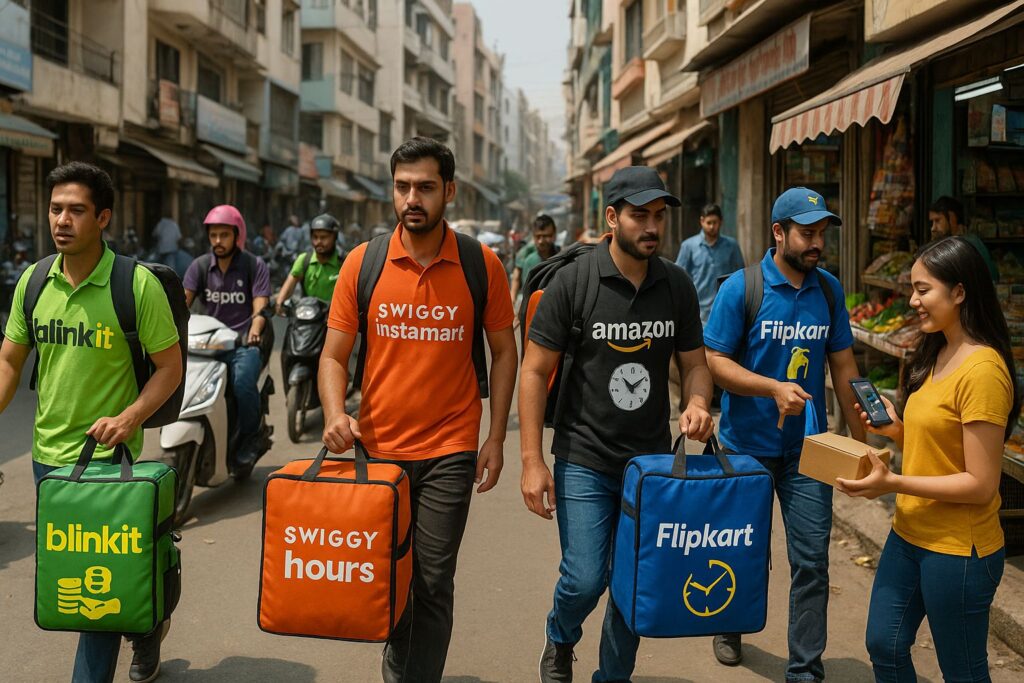
For e-commerce sellers, quick commerce offers both opportunities and challenges. The speed and comfort that outline structures like Zepto, Blinkit, and Swiggy Instamart require sellers to rethink inventory control, logistics, and consumer engagement.Meanwhile, giants like Amazon and Flipkart are entering the fray with offerings like Amazon Hours (equal-day or speedy slot-based totally total shipping) and Flipkart Minutes, intensifying competition.
To succeed, sellers must align their strategies with the unique demands of Q-commerce while leveraging the strengths of these marketplaces. This is where Amazon Listing Services play a crucial role in supporting your quick commerce goals.
Optimizing your product listings on Amazon ensures your essentials appear in relevant “Amazon hours” searches, rank excessively in cellular-first shopping reviews, and attract impulse buyers seeking out instantaneous transport. Effective Amazon Listing Services help with keyword studies, SEO-pushed content, and particular categorization, ensuring your product aligns with Amazon’s Q-commerce algorithms and customer expectations.
Additionally, properly managed listings enhance buy box eligibility for same-day shipping, real-time inventory syncing, and pricing automation—all of which might be important in brief trade’s speedy-paced environment. By combining Q-commerce logistics with optimized Amazon listings, e-commerce dealers can capitalize on both marketplace visitors and ultra-speedy shipping developments, driving conversions whilst building patron loyalty in an increasingly number of aggressive landscape.
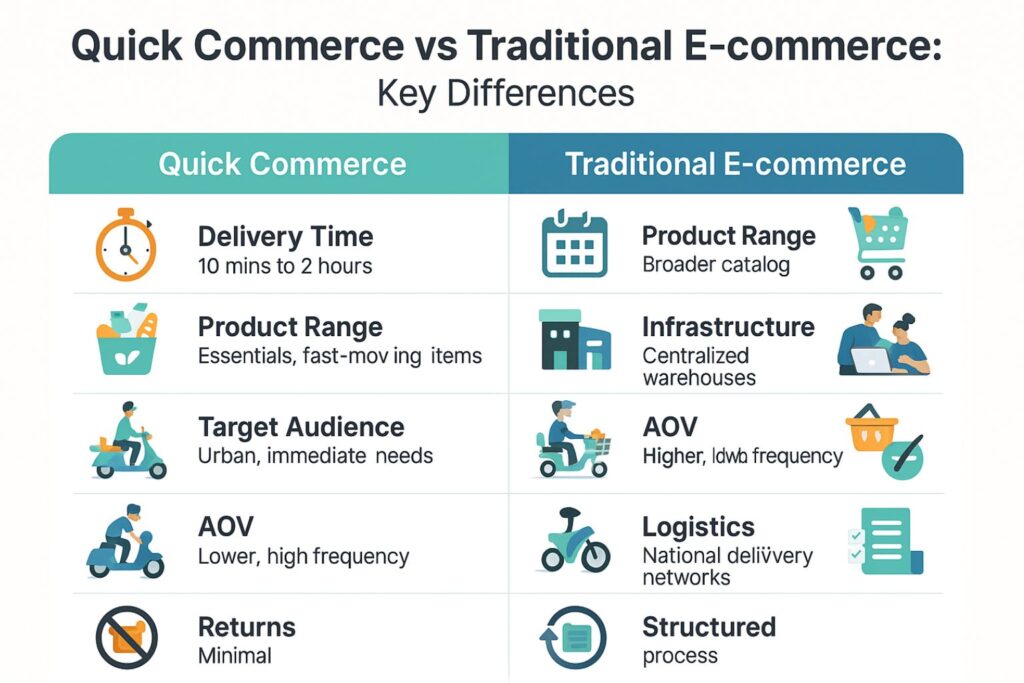
Quick Commerce vs Traditional Delivery E-commerce
Aspect
Quick Commerce
Traditional E-commerce
Delivery Time
10 mins to 2 hours (“Amazon hours”)
Same-day to 7 days
Product Range
Essentials, fast-moving items
Broader catalog
Infrastructure
Micro-fulfillment, dark stores
Centralized warehouses
Target Audience
Urban, immediate needs
Broader, planned purchases
AOV
Lower, high-frequency
Higher, lower frequency
Logistics
Hyperlocal, bike delivery
National delivery networks
Returns
Minimal
Structured process
Speed vs Selection:
Quick Commerce prioritizes speed and convenience over extensive product variety.
Traditional delivery e-commerce prioritizes variety with lower delivery urgency.
Infrastructure:
Q-commerce requires dark stores or micro-fulfillment centers within delivery radii.
Traditional e-commerce operates with large regional hubs for cost-efficient bulk movement.
Traditional e-commerce serves planned purchases like electronics, clothing, or furniture.
Profitability: Quick Commerce has lower margins but higher repeat orders, while traditional e-commerce has higher AOV but lower order frequency.
Returns: Returns are minimal in Q-commerce, especially for perishables, reducing operational complexities.
Takeaway: Sellers must adjust inventory, delivery promises, and marketing strategies to match Quick Commerce realities while maintaining traditional channels for planned purchases.
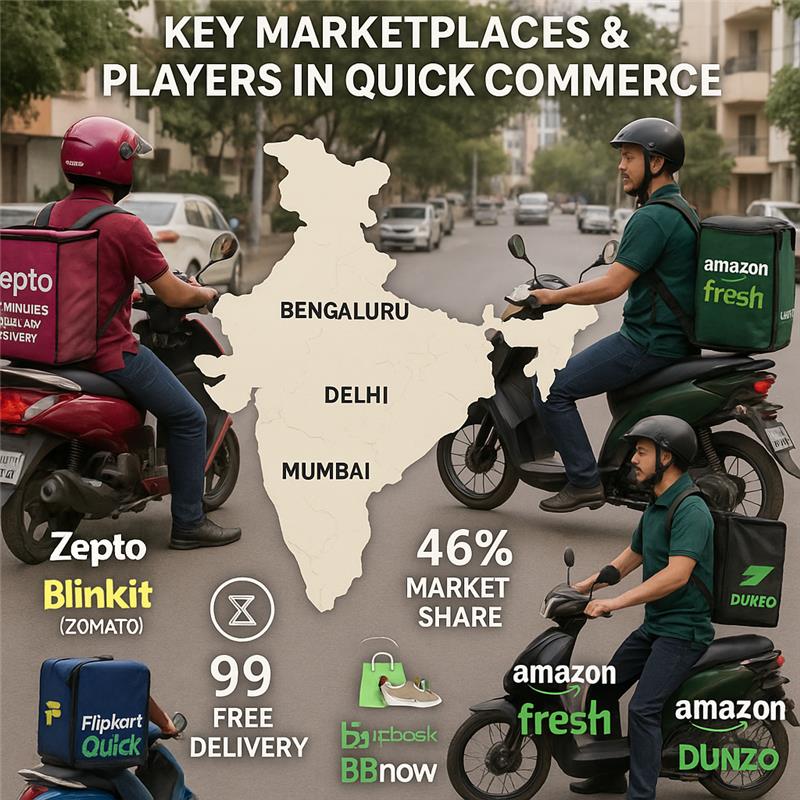
Key Marketplaces & Players in Quick Commerce
Understanding the principal gamers in quick trade is critical for e-commerce dealers looking to faucet into this marketplace. Each platform has distinct strengths, delivery fashions, and goal audiences, which dealers can leverage to optimize their reach and income.
Zepto
Known for its promise of 10-minute deliveries, Zepto focuses on ultra-rapid grocery and necessities shipping. It operates over 300 dark shops strategically positioned close to dense residential clusters in metro towns like Bengaluru, Delhi, and Mumbai. Zepto’s AI-pushed logistics and actual-time stock control make certain precision in order success, making it a top preference for dealers of fast-shifting consumer items (FMCG).
Blinkit (Zomato)
Blinkit leads the Indian short commerce market with a 46% share by way of gross merchandise cost (GMV). Its hyperlocal darkish save approach, with over 639 micro-warehouses, enables deliveries in as low as nine mins. Blinkit’s integration with Zomato’s transport network and its consciousness on excessive-demand city regions make it a powerhouse for sellers concentrated on millennials and Gen Z.
Flipkart Quick/Minutes
Flipkart has entered short trade with its Minutes service, released in 2024, supplying 10–14-minute deliveries in pick towns like Bengaluru, Delhi, and Mumbai. Unlike the competition, which focuses totally on groceries, Flipkart Minutes consists of electronics and fashion, catering to a broader target audience. Its low minimum order cost totally free delivery (₹99), appeals to rate-sensitive clients.
Amazon Fresh:
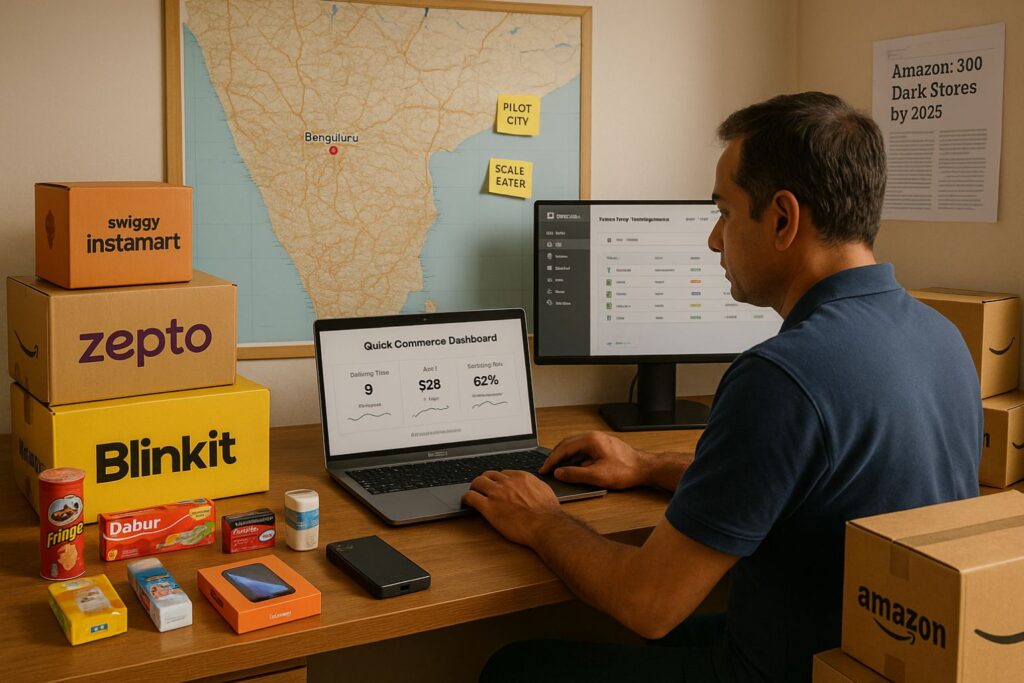
Amazon’s quick trade services, frequently called Amazon hours, consist of identical-day or two-hour shipping slots via Amazon Fresh, with a pilot for 10–15-minute deliveries (Amazon Now/Tez) released in Bengaluru in 2025.With three hundred dark stores deliberate by means of year-cease, Amazon leverages its Prime membership base and considerable logistics to compete with Blinkit and Zepto. Sellers gain from Amazon’s significant client base and records-driven insights.
BigBasket’s BB Now
BB Now supplies groceries within 15–30 minutes, supported with the aid of 500–600 dark stores across 35 towns. Backed by means of Tata Digital, BB Now integrates with BigBasket’s legacy e-commerce platform, providing a continuing switch between scheduled and speedy deliveries. Its BB Star subscription gives reductions and precedence shipping, appealing to common buyers.
Swiggy Instamart
With a 27% marketplace share, Swiggy Instamart can provide groceries and essentials in 15–45 mins, leveraging Swiggy’s meals shipping community and over 500 darkish stores. Its integration with the Swiggy app and Swiggy One membership (offering free deliveries) complements patron retention, making it a robust platform for FMCG dealers.
Why Quick Commerce Matters for E-commerce Sellers
Quick commerce is reshaping consumer behavior, particularly among urban millennials and Gen Z, who prioritize speed, convenience, and digital payments. Here’s why e-commerce sellers must adapt:
Consumer Demand for Speed: Over 63% of quick commerce revenue in 2024 came from orders delivered in 10 minutes or less, reflecting a preference for instant gratification.
Market Growth: The sector’s projected growth to $9.95 billion by 2029 offers sellers a massive opportunity to capture new customers.
Shifting Wallet Share: Platforms like Blinkit and Zepto are capturing wallet share from traditional e-commerce giants like Amazon and Flipkart, as consumers opt for faster deliveries.
Diverse Product Offerings: Quick commerce is expanding beyond groceries to include electronics, fashion, and even high-ticket items like laptops and gaming consoles, broadening the scope for sellers.
However, quick commerce also presents challenges, including high operational costs, intense competition, and the need for seamless logistics. Sellers must adopt strategic approaches to navigate these hurdles and capitalize on the opportunities.
Strategies for E-commerce Sellers in Quick Commerce
To thrive in the quick commerce ecosystem, e-commerce sellers must optimize their operations, leverage technology, and align with consumer expectations. Below are actionable strategies tailored for 2025:
1. Partner with Key Quick Commerce Platforms
Why It Matters: Each quick commerce platform has unique strengths—Blinkit’s speed, Zepto’s precision, Amazon’s customer base, or Swiggy’s integrated ecosystem. Partnering with multiple platforms diversifies your reach and mitigates reliance on a single marketplace.
How to Implement:
Research Platform Fit: Analyze which platforms align with your product category. For example, FMCG sellers should prioritize Blinkit, Zepto, and Swiggy Instamart, while electronics sellers may find Flipkart Minutes or Amazon Now more suitable.
Leverage Subscriptions: Platforms like BigBasket’s BB Star and Swiggy One offer subscription-based perks like free delivery, attracting loyal customers. Ensure your products are optimized for these programs to boost visibility.
Negotiate Terms: Work with platforms to secure favorable commission rates or promotional slots, especially during festive seasons when demand spikes (e.g., Raksha Bandhan or Diwali).
Example: A seller of organic snacks could partner with Swiggy Instamart to leverage its 25-city presence and Swiggy One membership, while also listing on Blinkit for its unmatched delivery speed.
2. Optimize Inventory for Hyperlocal Delivery
Why It Matters: Quick commerce relies on dark stores—small, hyperlocal warehouses stocked with high-demand items. Sellers must ensure their products are readily available in these micro-warehouses to meet ultra-fast delivery promises.
How to Implement:
Focus on Fast-Moving SKUs: Stock dark stores with high-demand, low-shelf-life products like snacks, personal care items, or fresh produce. For example, Blinkit’s Blinkit Fresh brand emphasizes quality-controlled fruits and vegetables.
Use AI for Inventory Management: Adopt AI-driven tools to predict demand and prevent stockouts. Zepto’s real-time inventory management minimizes delivery delays, and sellers can emulate this by syncing inventory with platform analytics.
Collaborate with Dark Store Operators: Work closely with platforms to ensure your products are strategically placed in dark stores near high-density areas. For instance, Zepto’s 350 dark stores are located in metro hotspots, ensuring rapid fulfillment.
Example: A seller of baby products could prioritize diapers and formula in Blinkit’s dark stores, ensuring availability for time-pressed parents in urban areas.
3. Leverage Amazon Hours for Competitive Edge
Why It Matters: Amazon’s Amazon hours—same-day or two-hour delivery slots through Amazon Fresh, with 10–15-minute pilots via Amazon Now—offer sellers access to a massive Prime membership base. Amazon’s entry into quick commerce in 2025 makes it a critical platform for sellers seeking scale.
How to Implement:
Optimize for Prime: Ensure your products are Prime-eligible to tap into Amazon’s loyal customer base, which values free and fast delivery.
Target Tier-2 and Tier-3 Cities: Amazon Fresh operates in over 300 cities, including smaller markets like Ambala and Aurangabad. Tailor your product offerings to these regions, where competition is less intense.
Use Amazon’s Data Insights: Leverage Amazon’s analytics to understand cross-category purchasing patterns and optimize product listings for quick commerce SKUs.
Example: A seller of kitchen appliances could list blenders and mixers on Amazon Now, capitalizing on the platform’s 10–15-minute delivery pilot in Bengaluru to attract impulse buyers.
4. Enhance Product Listings for Speed and Convenience
Why It Matters: Quick commerce customers prioritize convenience and clarity. Optimized product listings with clear descriptions, high-quality images, and competitive pricing drive conversions in a fast-paced environment.
How to Implement:
Highlight Quick Delivery: Emphasize delivery speed in product titles and descriptions (e.g., “Delivered in 10 Minutes by Zepto”).
Use High-Quality Visuals: Invest in professional images that showcase your products, as quick commerce shoppers make decisions in seconds. For example, Swiggy Instamart’s clean, visual-heavy app design drives impulse purchases.
Offer Bundles and Promotions: Create product bundles (e.g., shampoo + conditioner) or time-sensitive discounts to increase average order value (AOV). Flipkart Minutes’ low AOV (₹200–400) shows the power of catering to small, frequent purchases.
Example: A seller of personal care products could create a “Morning Essentials Kit” (toothpaste, face wash, deodorant) for Swiggy Instamart, marketed as a 15-minute delivery solution.
5. Invest in Last-Mile Logistics Partnerships
Why It Matters: Last-mile delivery is the backbone of quick commerce, with platforms like Blinkit and Zepto relying on bikes and scooters for rapid fulfillment. Sellers must ensure their products integrate seamlessly into these logistics networks.
How to Implement:
Partner with Third-Party Logistics: Collaborate with providers like Shadowfax or Dunzo for Business (D4B) to streamline last-mile delivery, especially for platforms like Magicpin’s Velocity service.
Optimize Packaging: Use compact, lightweight packaging to reduce delivery costs and improve efficiency. For example, Swiggy Instamart’s eco-friendly e-bikes require lightweight parcels for faster deliveries.
Monitor Delivery Performance: Track delivery times and customer feedback to identify bottlenecks. Blinkit’s 50% weekly retention rate highlights the importance of consistent, reliable delivery.
Example: A seller of packaged foods could partner with Dunzo’s D4B platform to deliver directly from local stores, reducing reliance on dark stores and cutting costs.
6. Capitalize on Festive and Peak Seasons
Why It Matters: Festive seasons like Diwali, Raksha Bandhan, and Ganesh Chaturthi drive massive spikes in Q-commerce demand. For example, Blinkit reported record-breaking orders during Raksha Bandhan 2024, with a surge in rakhi and sweet sales.
How to Implement:
Stock Seasonal Items: Offer festive-specific products like pooja items, sweets, or gifts, as seen with Zepto’s 4,000+ Ganesh idol deliveries in 2024.
Run Targeted Promotions: Use platform-specific coupons (e.g., Blinkit coupons via GrabOn) to attract price-sensitive customers during high-demand periods.
Scale Inventory: Anticipate demand surges by increasing stock in dark stores ahead of festivals. Swiggy Instamart’s fivefold increase in Rakhi orders underscores the need for preparedness.
Example: A seller of home decor could stock diyas and lanterns on BigBasket’s BB Now during Diwali, offering bundle discounts to boost AOV.
7. Focus on Profitability and Unit Economics
Why It Matters: Q-commerce’s high operational costs—Zepto spends ₹95–105 per order, Blinkit ₹130–135—require sellers to optimize margins. Platforms are shifting from growth-at-any-cost to profitability, with Blinkit becoming contribution margin positive in 2024.
How to Implement:
Introduce Private Labels: Develop private-label products to increase margins, as Blinkit did with Blinkit Fresh.
Increase AOV: Encourage larger orders through minimum order thresholds or upselling complementary products. Zepto’s AOV of ₹430–470 shows the impact of strategic pricing.
Optimize Delivery Fees: Align with platforms that charge small delivery fees during peak hours to offset costs, as seen with Swiggy Instamart.
Example: A seller of health supplements could launch a private-label protein bar on Zepto, bundled with energy drinks to increase AOV and margins.
8. Expand into Tier-2 and Tier-3 Cities
Why It Matters: While Tier-1 cities dominate Q-commerce (66.55% market share in 2024), Tier-2 and Tier-3 cities are growing at an 8.51% CAGR, offering untapped potential. Platforms like Amazon Fresh and JioMart are already targeting these markets.
How to Implement:
Tailor Product Offerings: Offer affordable, high-demand products like pantry staples or personal care items suited to smaller cities. JioMart’s value-driven approach resonates in these markets.
Partner with Regional Platforms: Collaborate with platforms like JioMart, which has deep reach in Tier-2 and Tier-3 cities, to access new customer bases.
Leverage Local Partnerships: Work with local Kirana stores or retailers to fulfill orders, as Dunzo does, to reduce logistics costs in smaller markets.
Example: A seller of household cleaners could partner with JioMart to target Tier-2 cities like Jaipur, offering budget-friendly multipacks for cost-conscious consumers.
9. Embrace Technology and Data Analytics
Why It Matters: Quick commerce platforms rely on AI, GIS, and real-time tracking to optimize operations. Sellers who leverage these technologies can improve efficiency and customer satisfaction while maintaining competitiveness in the ultra-fast delivery space.
How to Implement:
Use AI for Demand Forecasting: Adopt AI tools to predict peak demand hours (e.g., 7–10 p.m.) and stock accordingly. Zepto’s AI-powered tracking minimizes delivery routes, while forecasting tools reduce wastage by aligning inventory with actual consumer behavior.
Integrate with Platform APIs: Use platform APIs to sync inventory, pricing, and promotions in real time. Amazon’s data lakes provide insights into cross-category purchasing patterns, helping you align SKUs with hyperlocal demand for quick commerce.Enterprise sellers running complex multi-channel stores can benefit from Adobe Commerce Managed Services to keep these integrations stable, optimized, and scalable as order volumes grow.
Monitor Customer Feedback: Analyze reviews and ratings to refine product offerings and improve customer satisfaction. Blinkit’s high retention rate is driven by its focus on continuous feedback loops for Q-commerce optimization.
Streamline Data Entry Processes: Efficient data entry services are critical in Quick Commerce for maintaining accurate inventory data, updating product information, and managing price changes across platforms like Amazon, Flipkart, and Swiggy Instamart in real-time. Manual data delays can lead to stockouts or overselling, harming your Q-commerce promise. Outsourcing data entry or automating it with APIs ensures:
Real-time SKU updates during peak demand hours
Accurate order tracking data for customers
Swift updates for promotions, flash sales, and price adjustments
Seamless catalog management across quick commerce channels
Example: A seller of pet supplies could use Zepto’s API to adjust inventory based on real-time demand for pet food in Bengaluru, ensuring no stockouts during peak hours. By outsourcing data entry for daily SKU updates and order data reconciliation, the seller reduces manual errors and maintains accurate product listings, supporting instant delivery promises effectively.
10. Build Customer Loyalty Through Personalization
Why It Matters: With intense competition, retaining customers is as important as acquiring them. Personalized experiences drive repeat purchases and loyalty, as seen with Blinkit’s 50% weekly retention rate.
How to Implement:
Offer Subscription Plans: Align with platforms like BigBasket’s BB Star or Swiggy One to offer discounts and priority delivery to loyal customers.
Use Targeted Marketing: Leverage platform data to send personalized offers (e.g., discounts on frequently purchased items). Swiggy Instamart’s integration with Swiggy’s app enables seamless cross-promotions.
Ensure Quality and Accuracy: Maintain high product quality and order accuracy to build trust. AI-driven substitution engines, as used by Blinkit, suggest alternatives for out-of-stock items to sustain conversion rates.
Example: A seller of coffee could offer a subscription plan on BigBasket’s BB Star, providing weekly deliveries of premium blends at a discount to retain customers.
Challenges and How to Overcome Them
While quick commerce offers immense potential, sellers must navigate several challenges:
High Operational Costs: Delivery prices can erode margins. Mitigate this by optimizing packaging, which specializes in high-margin merchandise, and negotiating favorable platform terms.
Intense Competition: With Blinkit, Zepto, and Swiggy Instamart protecting over 90% marketplace share, differentiation is fundamental. Focus on particular product services or non-public labels to stand out.
Regulatory Hurdles: Compliance with regulations and safety laws is vital. Work with platforms to ensure adherence to neighborhood regulations.
Consumer Loyalty: Retaining clients in an aggressive market requires constant pleasant and customized reports. Invest in loyalty applications and consumer comments loops.
Guidance for E-commerce Sellers Entering Quick Commerce
For sellers new to quick commerce, here’s a step-by-step guide to get started:
Assess Your Product Fit: Identify products suitable for quick commerce (e.g., FMCG, small electronics). Avoid bulky or low-demand items that don’t align with fast delivery.
Choose the Right Platforms: Start with one or two platforms (e.g., Blinkit for speed, Amazon for scale) based on your target audience and product category.
Invest in Technology: Use inventory management software and platform APIs to streamline operations and prevent stockouts.
Test and Scale: Begin with a pilot in a single city (e.g., Bengaluru, the hub for quick commerce experimentation) before expanding to other markets.
Monitor Performance: Track key metrics like delivery time, AOV, and customer retention to refine your strategy.
Stay Agile: Quick commerce evolves rapidly. Stay updated on platform innovations (e.g., Amazon’s 300 dark stores by 2025) and consumer trends to remain competitive.
The Future of Quick Commerce in 2025
The quick commerce landscape in 2025 will be defined by increased competition, technological advancements, and expansion into new markets. Here are key trends to watch:
Mergers and Acquisitions: Consolidation will continue, with players like Zomato (Blinkit) and Tata (BigBasket) strengthening their grip. Amazon’s potential acquisition of Swiggy Instamart could reshape the market.
Broader Product Categories: Quick commerce is moving beyond groceries to electronics, fashion, and services (e.g., Snabbit’s 10-minute laundry). Sellers should diversify their offerings to capture new demand.
Sustainability Focus: Platforms like Swiggy Instamart are adopting eco-friendly e-bikes. Sellers can align with this trend by using sustainable packaging.
Tier-2 and Tier-3 Expansion: As platforms like JioMart and Amazon Fresh target smaller cities, sellers must tailor their strategies to these markets.
AI and Automation: AI-driven logistics, substitution engines, and robotics in dark stores will enhance efficiency, benefiting sellers who integrate with these systems.
Conclusion
Quick trade is now not a gap; it’s a transformative force in transport e-trade, pushed by using structures like Zepto, Blinkit, Swiggy Instamart, and Amazon’s Amazon hours.
For e-commerce sellers, achievement in 2025 hinges on partnering with the proper systems, optimizing stock for hyperlocal shipping, leveraging era, and constructing patron loyalty.
By specializing in excessive-demand products, embracing data-driven techniques, and staying agile in a competitive landscape, sellers can capitalize on the $ $5.Five billion quick trade market.
Whether you’re a small FMCG seller or a huge electronics logo, now’s the time to evolve, innovate, and experience the short trade wave to drive boom and profitability.
Frequently Asked Questions
1. What is quick commerce, and how does it differ from traditional e-commerce?
Answer: Quick commerce, or q-commerce, is a subset of delivery e-commerce that focuses on ultra-fast delivery of goods, typically within 10–30 minutes. Unlike traditional e-commerce, which may take days to deliver, quick commerce uses hyperlocal dark stores and optimized logistics to cater to immediate consumer needs, such as groceries, personal care items, or small electronics. Platforms like Zepto and Blinkit exemplify this model by prioritizing speed and convenience.
2. Why should e-commerce sellers consider entering the quick commerce market in 2025?
Answer: Quick commerce is projected to reach a $5.5 billion market size in India by the end of 2025, growing at a 67% CAGR. It caters to urban consumers’ demand for instant gratification, capturing wallet share from traditional e-commerce. By joining platforms like Swiggy Instamart or Amazon Fresh, sellers can access new customers, increase sales frequency, and stay competitive in a rapidly evolving delivery e-commerce landscape.
3. What are Amazon’s hours, and how can sellers leverage them?
Answer: Amazon hours refer to Amazon’s same-day or two-hour delivery slots offered through Amazon Fresh, with pilots like Amazon Now delivering in 10–15 minutes in select cities like Bengaluru. Sellers can leverage Amazon hours by listing Prime-eligible products, targeting Amazon’s vast customer base, and using Amazon’s analytics to optimize listings for quick commerce SKUs, ensuring high visibility and conversion rates.
4. Which quick commerce platforms should e-commerce sellers prioritize in 2025?
Answer: Key platforms include: Blinkit: Best for high-demand urban markets, offering 9-minute deliveries and a 46% market share. Zepto: Ideal for FMCG sellers with its 10-minute delivery model and 350+ dark stores. Flipkart Minutes: Suitable for electronics and fashion sellers, with 10–14-minute deliveries. Amazon Fresh: Offers scale and reach, especially in Tier-2 and Tier-3 cities. Swiggy Instamart: Strong for groceries, with integration into Swiggy’s ecosystem. BigBasket’s BB Now: Great for grocery sellers with 15–30-minute deliveries. Dunzo Daily: Niche option for hyperlocal pickups and essentials. Sellers should choose platforms based on their product category and target audience.