

Due to the fact that shoppers are unable to physically inspect products, product images represent the primary means by which shoppers acquire information about a product’s appearance, quality, size, and ability to be used.
Thus, product images greatly influence consumer purchase decisions on Amazon, and that makes it very important for sellers to conform to certain specific image guidelines established by Amazon to ensure consistent use of images by all sellers and thereby develop trust in the consumer.
As the different Amazon listing image types exist, and to understand what is allowed and what is not allowed will assist sellers in preventing the rejection of listings and in creating high-quality, informative product listings, the following provides thorough information on each of the different image categories, along with how Amazon listing services professionally provide Amazon sellers with support with their compliance efforts.
Why Amazon Listing Images Are Important
Product images influence how customers perceive a product and whether they choose to click, explore, or purchase. Clear visuals reduce uncertainty and help customers make confident decisions. From Amazon’s perspective, accurate images also contribute to better customer experience and fewer returns.
Strong listing images:
- Improve visibility and click-through rates
- Help customers understand the product clearly
- Reduce post-purchase dissatisfaction
Because of this impact, image optimization is a key focus area for experienced sellers and Amazon listing services.
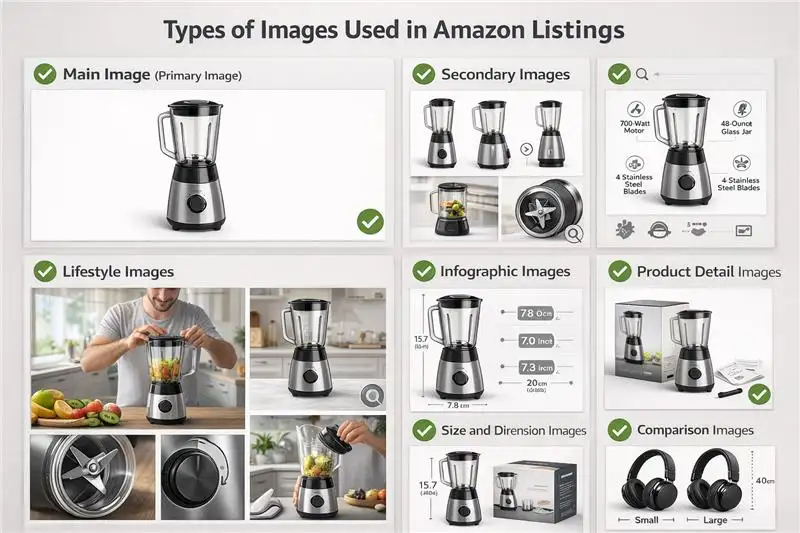
Types of Images Used in Amazon Listings
Amazon allows one main image along with several additional images. Each image type has a specific purpose and must follow defined content and technical rules.
Main Image (Primary Image)
What the Main Image Represents
The main image is the most strictly regulated in an Amazon listing. It appears in search results and creates the first impression of the product.
The product must be displayed on a pure white background, with no distractions or decorative elements. The image should be clear, high resolution, and accurately represent the item being sold.
What Is Allowed and Not Allowed
For main images, Amazon permits only simple and clean presentations. Text overlays, logos, lifestyle backgrounds, props, watermarks, or promotional graphics are not allowed. Showing multiple products is only acceptable when they are sold together as a single unit.
Due to these strict rules, many sellers rely on Amazon listing services to ensure their main images meet approval standards.
Secondary Images
Secondary images support the main image by offering additional visual information. These images allow sellers to show different angles, features, and practical details that cannot be communicated through the primary image alone.
Secondary images are commonly used to:
- Show multiple product angles and close-ups
- Highlight important features or components
- Demonstrate scale or size
Although they offer more flexibility, secondary images must remain accurate and relevant.
Lifestyle Images
Purpose of Lifestyle Images
Lifestyle images show the product being used in real-life situations. These images help customers understand how the product fits into their daily routine and intended environment.
Lifestyle images may include people using the product naturally, as long as the usage is realistic and safe. Exaggerated results, misleading scenarios, or inappropriate use cases are not permitted. Professional Amazon listing services focus on realistic lifestyle visuals that educate rather than exaggerate.
Infographic Images
Role of Infographics in Product Listings
Infographic images combine visuals with limited text to explain features, dimensions, or usage. These images are especially helpful for products that require explanation or have multiple components.
Infographics should present factual information only. Amazon does not allow pricing details, discount offers, customer reviews, star ratings, or promotional claims within images. Accurate and well-structured infographics improve customer understanding and reduce buying hesitation.
Product Detail Images
Product detail images provide close-up views of materials, texture, and construction quality. These images allow customers to inspect the product more closely before purchasing.
Detailed images must reflect the actual product without excessive editing. Any accessories or add-ons shown should be included in the purchase to avoid misleading customers.
Size and Dimension Images
Size-related confusion is one of the most common reasons for product returns. Dimension images help customers understand the product’s actual scale and proportions.
Effective dimension images typically:
- Show clear measurement lines
- Include accurate units such as inches and centimeters
- Present information in a readable and simple format
Including such visuals is a standard practice in professional Amazon listing services.
Packaging Images
Packaging images are useful when the box design or included contents are important to the buyer. These images should clearly show what the customer will receive.
Only current and accurate packaging should be displayed. Outdated packaging designs or images showing items not included in the order can lead to customer dissatisfaction and policy violations.
Comparison Images
Images for product comparison are a method by which consumers have multiple choices concerning the sizes or colours of the same item. Available on Amazon allows for images to be associated with the seller’s own products, as well as prohibiting any image containing competitor branding or logos, or any negative comments towards any competitor’s Item.
Images used for product comparison provide the potential Customer with Additional ways to view the specific Products they are Interested in Purchasing clear options, while adhering to the guidelines set by Amazon for approved content to upload.
Amazon Image Technical Requirements
Amazon enforces technical standards to ensure images display properly across all devices. Images must meet minimum resolution requirements to enable zoom functionality and maintain clarity.
Recommended standards include:
- At least 1,000 pixels on the longest side
- Preferred resolution of 2,000 pixels or higher
- Accepted formats such as JPEG, PNG, or TIFF
Meeting these requirements is essential for listing approval and performance.

Common Reasons Amazon Rejects Images
Amazon may reject a product’s image for a variety of reasons, including its use of a non-white background as the main listing image, poor-quality images, promotional text, and inaccurately representing the product. Minor guideline violations can affect how visibility appears to consumers when an item is listed.
Listing service providers assist sellers by performing compliance checks that eliminate the possibility of rejection as a result of guideline violations.
Restricted Image Content on Amazon
There are many types of image content that Amazon does not allow, including sexually explicit and otherwise inappropriate, visually dangerous, dangerous product use, medical/ health-related claims, before-and-after comparisons, and false promises. Violations of these guidelines can negatively impact the listing and/or overall health of your account.
Role of Amazon Listing Services in Image Optimization
Managing multiple products’ image compliance can become burdensome and time-consuming for many sellers who are selling their products through Amazon. Amazon listing professional services help sellers manage their product images by ensuring compliance with content, technical, and platform requirements for Amazon listings.
Professional services focus on creating clear, accurate, and consistent product images for their seller clients to allow sellers to optimize their product listings for continued successful performance.
Conclusion
The visual assets present in Amazon Product listings can have a tremendous impact on the level of customer confidence; because of this, it’s critical that sellers understand each type of image and what is permitted and not permitted. Having this knowledge will assist sellers in maximizing their compliance and overall effectiveness when creating listing photographs.
Through both in-house management and utilizing professional Amazon listing services to develop and manage your Listing Images, it is possible to create well-structured, accurate Images that improve a customer’s ability to understand what they are purchasing and result in fewer returned products, ultimately contributing to your long-term success on Amazon.com.
TAGS
