

Photography has really altered a lot in just the past few years. Now, snapping the picture is only part of what makes a photo; the editing is where things usually get fantastic. In fact, editing professionally will fully change how an image looks if you’re putting something on social media, creating a collection of your work, running an internet shop, or just saving a moment in time.
Because of this, lots of people are looking for “how to edit photos like a pro”, “how to edit pictures professionally”, or “how to professionally edit photos”. Luckily, modern editing programs mean that anyone, even if they’re starting out, can get results as good as the professionals.
And what’s great is that you don’t need to have spent ages learning or to buy expensive programs for a studio. A good grasp of what photo editing can do, along with clever ways of using it, lets absolutely anyone make pictures that are striking to look at.
Why Professional Photo Editing Matters
A good photograph captures attention, but a professionally edited image creates impact. Editing helps improve lighting, colors, sharpness, mood, and overall visual quality.
Professional editing is not about changing reality completely. Instead, it enhances the natural beauty of a photo while fixing distractions and imperfections.
Today, editing is important for:
- Social media creators
- Wedding photographers
- E-commerce businesses
- Travel bloggers
- Personal branding
- Marketing campaigns
Without proper editing, even high-quality photos can look flat or unprofessional.
Understanding the Basics of Photography Edits
Before learning how to professionally edit photos, it is important to understand what editing actually means.
Photography edits involve improving an image after it has been captured. This includes correcting brightness, contrast, color balance, sharpness, and composition.
Professional editors usually focus on three things:
- Fixing technical problems
- Enhancing visual appeal
- Maintaining natural quality
The goal is always balanced. Over-editing can make an image look artificial, while subtle editing creates a polished and professional appearance.
How to Edit Photos Like a Pro
If you want to learn how to edit photos like a pro, start with a clean editing workflow instead of randomly applying filters.
Professional editors usually follow a step-by-step process:
Start with Exposure Correction
Exposure determines how bright or dark a photo appears. If an image is too dark, details become hidden. If it is too bright, highlights can get washed out.
The first step in professional editing is balancing exposure naturally.
Adjust Contrast Carefully
Contrast controls the difference between bright and dark areas in an image. Increasing contrast can make photos look sharper and more dramatic.
However, professional editing avoids extreme contrast because it can remove natural texture.
Improve Color Balance
Colors strongly influence the mood of a photograph. Warm tones create a cozy feeling, while cooler tones give a cinematic effect.
Learning color balance is one of the most important parts of understanding how to edit pictures professionally.
Professional editors usually keep colors realistic instead of oversaturated.
Enhance Sharpness Without Overdoing It
Sharpness improves image clarity and detail. However, too much sharpening creates an unnatural look.
A professional edit should feel clean and detailed while still maintaining softness where needed.
Crop for Better Composition
Composition plays a major role in visual storytelling. Cropping helps remove distractions and improve focus on the subject.
Professional photographers often use cropping to align subjects according to composition rules like the rule of thirds.
How to Edit Pictures Professionally on Mobile
Mobile editing has become extremely powerful. Many creators now edit entire projects directly from smartphones.
Modern mobile apps include advanced photo editing features like:
- AI enhancement
- Object removal
- Background blur
- Color grading
- Noise reduction
This allows beginners to create professional-looking edits without desktop software.
The advantage of mobile editing is convenience. You can shoot, edit, and publish content within minutes.
Essential Photo Editing Features Every Editor Should Use
There are multiple tools contained in modern editing software, but not all tools will be required to achieve a professional result. The most useful photo editing tools include brightness adjustment, contrast control, white balance, sharpening, and selective editing.
Selective editing is particularly important because it allows you to edit only the essential sections of an image, while leaving the rest of the photograph unchanged. AI-based tools, as well, are becoming very popular because they execute complex editing tasks automatically and will save you time.
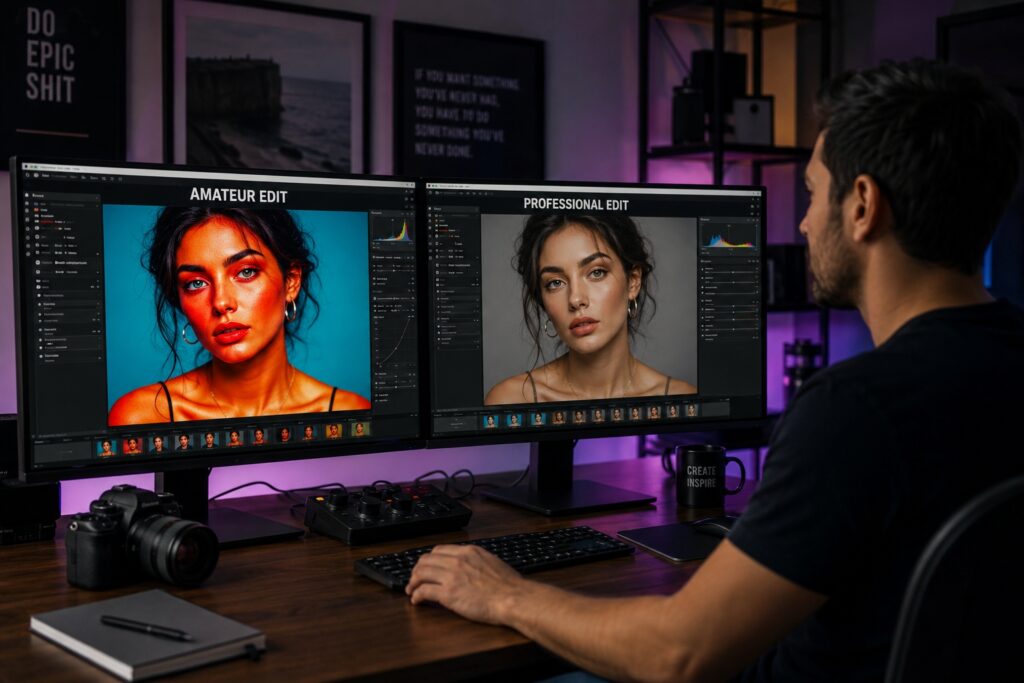
The Difference Between Amateur and Professional Editing
One of the biggest differences between beginners and professionals is editing control.
Amateur editing often includes:
- Heavy filters
- Excessive saturation
- Extreme skin smoothing
- Over-sharpening
Professional editing focuses more on realism and subtle improvements.
Experienced editors understand that the best edits are often the least noticeable.
Common Mistakes Beginners Make
A lot of people beginning their photo editing experience tend to make the same kinds of mistakes. Over-editing is one of the primary mistakes that will destroy the original beauty of an image. Applying multiple effects to an image will typically take away from its natural beauty.
The lighting balance between the brightness and shadows should be appropriate and work together in a natural way, rather than in direct competition.
In addition, many beginners rely on presets for too much of their work, without truly understanding the entire editing process.
When editing professionally, it is important to understand why you are making any changes rather than simply making random adjustments to your images.
Photography Edits That Improve Social Media Content
Social media platforms have changed how people edit images. Today, users prefer clean, aesthetic, and visually balanced photos.
Photography edits for social media usually focus on:
- Better lighting
- Consistent color tones
- Clean backgrounds
- Sharp subject focus
Professional creators also maintain a consistent editing style across all posts to build a recognizable visual identity.
This consistency helps improve branding and audience engagement.
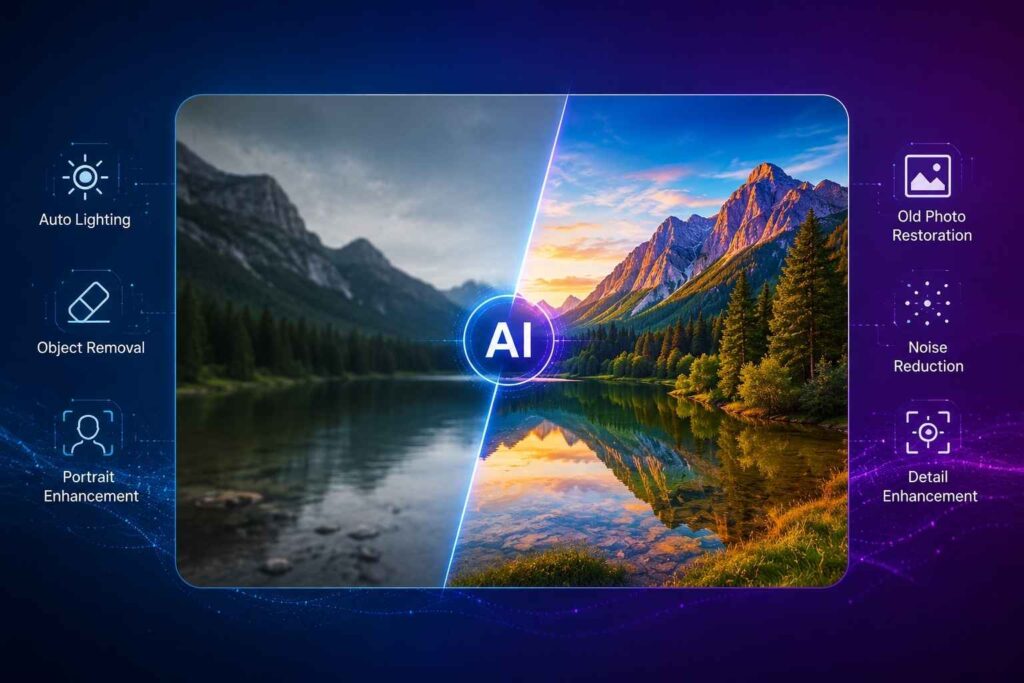
How AI Is Changing Photo Editing
Artificial intelligence has transformed modern photo editing completely.
AI tools can now:
- Automatically fix lighting
- Remove unwanted objects
- Improve portrait quality
- Enhance old photos
- Reduce blur and noise
This has made professional editing accessible even for beginners.
However, professional editors still use manual adjustments to maintain creative control and a unique style.
How to Build Your Own Editing Style
All professional photographers create a unique editing style for their photography. Many pros like light, bright images; many prefer dark, moody, or filmic-style images. This editing style has become part of who that photographer is as an artist.
To develop your own editing style, you need to build it through consistency and experimentation.You should give your photographs an edit that reflects your personal style, rather than trying to emulate what might be “popular” at any given time.
Why Natural Editing Works Best
The trend for today’s audiences is that we are drawn to authentic images. Over-edited photos can be perceived as fake and lack the ability to engage viewers.
With natural editing, we build trust with our audiences while improving the overall quality of the image without distracting our audiences from the message of the photograph.
The professional edition is not about transforming reality; it is about enhancing the existing reality. This is particularly crucial for brands/influencers/photographers who wish to develop long-term trust with their audience members.
The Future of Professional Photo Editing
There is a move towards speedier & more intelligent editing via AI assistance. However, understanding the fundamentals of creativity will also be key.
Technology has come a long way in terms of creative tools. Yet an understanding of composition, light and storytelling will remain the differentiating factor for professionals as opposed to amateurs.
Photo editing will now require knowledge of software, but also knowledge of how people perceive images emotionally & how they are balanced in relation to one another.
Final Thoughts
Photo editing has become an essential skill in today’s digital world. Whether you are a beginner or an experienced creator, learning how to edit pictures professionally can significantly improve the quality of your images.
Modern tools and advanced photo editing features have made editing easier than ever before. From mobile apps to AI-powered software, professional-quality results are now accessible to everyone.
The key is to focus on natural enhancement instead of excessive effects. Good photography edits should improve an image while keeping it realistic and visually balanced.
With practice, patience, and the right techniques, anyone can learn how to professionally edit photos and create images that truly stand out.
TAGS
