

Photo editing has become one of the most important parts of modern photography. A great image is not only captured through the camera but also improved through professional editing techniques.
Today, photographers use different artistic styles for photo editing to create unique moods, enhance storytelling, and build a recognizable visual identity. Every photographer has a different creative approach. Some prefer natural and realistic photography edits, while others use dramatic cinematic tones, vintage effects, or minimalist aesthetics. These editing styles help photographers express creativity and create visually engaging content for social media, advertising, ecommerce, fashion, weddings, and commercial projects.
Modern image editing techniques allow photographers to improve lighting, colors, textures, and composition while maintaining high image quality. With the right editing style, even a simple photograph can become visually powerful and emotionally engaging.
In this guide, you will explore popular photo editing styles, professional photography edits, creative editing techniques, and the tools photographers use to create modern visual content.
Why Photo Editing Styles Are Important
Editing style plays a major role in photography because it helps photographers create consistency and artistic identity. A unique editing style allows viewers to recognize a photographer’s work instantly.
Professional editing also improves storytelling by enhancing colors, shadows, contrast, lighting, and emotions. Different photography editing styles create different visual experiences for viewers.
A strong editing style helps photographers:
- Build a recognizable visual identity
- Improve portfolio consistency
- Enhance storytelling
- Strengthen personal branding
- Increase audience engagement
- Create professional-quality visuals
Many successful photographers are known for their signature photo editor style. Their editing techniques become an important part of their brand image and creative presentation.
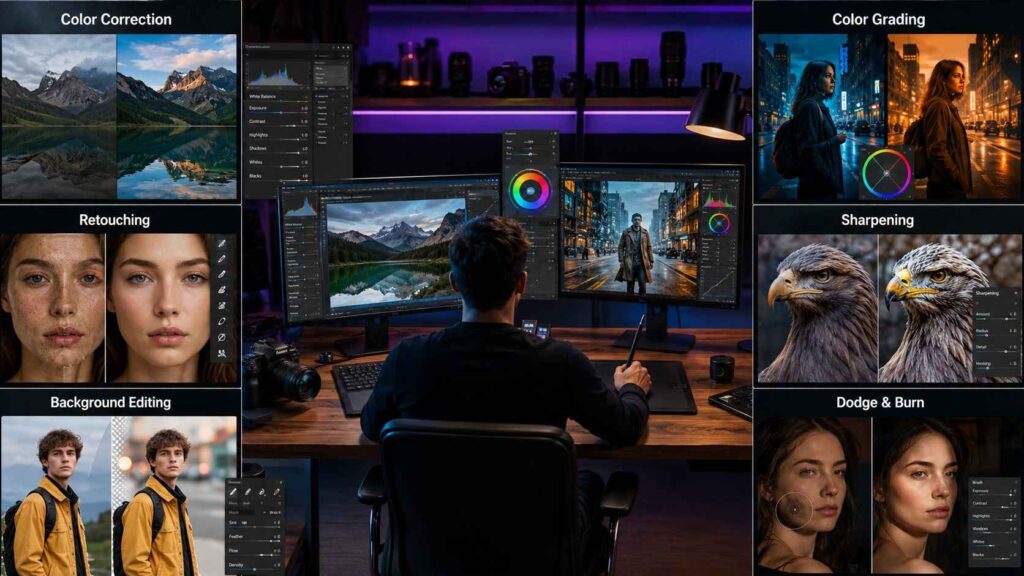
Essential Image Editing Techniques
Before understanding different photo editing styles, it is important to learn the core image editing techniques used in professional photography.
Color Correction
Color correction helps balance white balance, exposure, highlights, shadows, and contrast. This technique improves image quality and creates realistic-looking visuals.
Professional photographers usually perform color correction before applying creative edits.
Color Grading
Color grading changes the emotional tone of an image using creative color combinations. Warm tones create softness and emotion, while cooler tones create cinematic and dramatic effects.
Retouching
Retouching removes blemishes, dust, distractions, and imperfections while maintaining natural textures. It is widely used in portrait photography, fashion photography, and commercial editing.
Sharpening
Sharpening improves image clarity and texture details. It is commonly used in product photography, wildlife photography, and landscape photography.
Background Editing
Background editing helps isolate the subject by removing distractions or adding blur effects. Some photographers also replace backgrounds completely for creative projects.
Dodge and Burn
Dodge and burn techniques selectively brighten and darken parts of an image to create depth, dimension, and visual balance.
These image editing techniques are used in almost every professional photography workflow.
Popular Artistic Styles for Photo Editing
Different photography niches require different editing styles. Below are some of the most popular artistic styles for photo editing used by modern photographers.
1. Natural Editing Style
Natural editing focuses on enhancing images while preserving realistic colors and textures. This style avoids excessive filters and dramatic manipulation.
Features of Natural Editing
Natural editing enhances the original beauty of an image while keeping it realistic and balanced. This style focuses on accurate skin tones, soft lighting, and subtle color correction without making the photo look heavily edited. It creates timeless visuals that feel authentic and emotionally connected.
Best Used For
Natural editing is widely used in wedding photography, family portraits, lifestyle shoots, and documentary photography. It works best when photographers want to preserve genuine emotions and realistic details.
2. Cinematic Editing Style
Cinematic editing creates dramatic visuals inspired by movies and storytelling photography. It focuses on emotional depth and atmospheric color grading.
Features of Cinematic Photography Edits
Cinematic editing creates dramatic visuals inspired by movies and storytelling scenes. It uses deep shadows, creative color grading, moody lighting, and strong contrast to produce emotional and visually powerful images. This style often gives photos a professional, film-like atmosphere.
Best Used For
Cinematic photography edits are popular in fashion photography, travel photography, portraits, and creative editorial projects where mood and storytelling are important.
3. Vintage Photo Editing Style
Vintage editing recreates the nostalgic appearance of classic film photography using faded tones and retro-inspired textures.
Features of Vintage Editing
Vintage editing recreates the nostalgic appearance of old film photography using faded tones, matte shadows, and subtle film grain. It gives photos a warm, retro-inspired look that feels artistic and timeless. This editing style is often used to create emotional and classic visuals.
Best Used For
Vintage edits are commonly used in wedding photography, street photography, travel content, and lifestyle shoots that require a nostalgic artistic mood.
4. Black and White Editing Style
Black and white editing removes color distractions and focuses on light, shadows, texture, and emotion.
Features of Black and White Edits
Black and white editing removes color distractions and emphasizes light, shadows, textures, and composition. This style creates a strong emotional impact and gives photographs a timeless artistic appearance. It is especially effective for dramatic storytelling and expressive portraits.
Best Used For
Black-and-white photography edits are ideal for portrait, fine art, architectural, and documentary photography.
5. Bright and Airy Editing Style
Bright, airy editing creates soft, luminous visuals with warm highlights and clean tones.
Features of Bright and Airy Editing
Bright and airy editing creates soft, clean, and luminous images with warm highlights and minimal shadows. The style gives photos a fresh, elegant, and dreamy appearance that feels visually light and pleasing. It is widely used for modern social media aesthetics.
Best Used For
This editing style is highly popular in wedding photography, newborn sessions, lifestyle photography, influencer content, and fashion shoots.
6. Dark and Moody Editing Style
Dark and moody editing creates emotional depth using rich shadows and muted colors.
Features of Moody Photography Edits
Dark and moody editing focuses on rich shadows, muted colors, and dramatic contrast to create depth and emotional storytelling. It gives images a cinematic atmosphere and makes subjects stand out with strong visual intensity. This style often feels artistic and mysterious.
Best Used For
Moody photography edits are commonly used for portraits, food photography, creative shoots, fine art photography, and cinematic storytelling projects.
7. HDR Editing Style
HDR editing combines multiple exposures to preserve details in both bright and dark areas of a photo.
Features of HDR Editing
HDR editing combines multiple exposures to preserve details in both highlights and shadows. This technique creates highly detailed, vibrant, and dynamic images with enhanced textures and clarity. It is useful when photographers want balanced lighting in complex scenes.
Best Used For
HDR photography edits are best for landscape photography, real estate photography, architecture photography, and nature photography.
8. Minimalist Editing Style
Minimalist editing focuses on simplicity and clean visual presentation without unnecessary distractions.
Features of Minimalist Editing
Minimalist editing focuses on simplicity, clean composition, and distraction-free visuals. It uses soft tones, subtle enhancements, and balanced negative space to create a modern and professional appearance. This style keeps the viewer’s attention on the main subject.
Best Used For
Minimalist editing works perfectly for product photography, branding content, modern lifestyle photography, and social media visuals.
9. High Fashion Editing Style
Fashion editing uses advanced retouching and professional color grading to create polished commercial visuals.
Features of Fashion Editing
Fashion editing uses advanced retouching, professional color grading, and sharp detail enhancement to create magazine-quality visuals. This style focuses heavily on skin retouching, lighting balance, and premium presentation. It gives photos a polished commercial appearance.
Best Used For
Fashion photography edits are commonly used in beauty campaigns, advertising photography, editorial shoots, ecommerce fashion, commercial branding, and haircut styles photography, where accurate color grading and professional retouching help showcase every detail.
10. Matte Editing Style
Matte editing softens deep shadows and creates faded black tones for a smooth artistic appearance.
Features of Matte Editing
Matte editing softens dark shadows and creates faded black tones for a smooth and artistic appearance. This style gives photos a film-inspired look with muted colors and soft contrast. It is widely used in modern creative photography and social media visuals.
Best Used For
Matte editing styles are popular in wedding photography, Instagram content, influencer photography, travel photography, and lifestyle shoots.
How to Choose the Right Editing Style
Choosing the right editing style depends on your photography niche, creative vision, and target audience. Different photography genres require different editing approaches.
For example:
- Wedding photography often uses natural or bright edits
- Fashion photography commonly uses cinematic or editorial editing
- Product photography requires realistic color correction
- Travel photography often benefits from vibrant cinematic tones
Consistency is also important. Using similar photography edits throughout your portfolio helps strengthen visual branding and professional identity.
Many photographers experiment with multiple editing styles before developing their own signature look.
Common Photo Editing Mistakes
Even professional photographers sometimes make editing mistakes that reduce image quality and realism.
Overediting Images
Overediting is one of the most common mistakes in photo editing. Excessive skin smoothing, sharpness, contrast, or saturation can make photos look unrealistic and artificial. Professional editing should enhance an image while preserving its natural appearance.
Inconsistent Color Grading
Using different tones and editing styles across a portfolio can weaken visual consistency. Consistent color grading helps photographers build a recognizable brand identity and maintain a professional look.
Excessive HDR Effects
Too much HDR editing can create unnatural textures, overly bright highlights, and unrealistic colors. HDR should improve image detail without making the photograph look heavily processed.
Poor Skin Retouching
Heavy retouching often removes natural skin texture and creates plastic-looking portraits. Good retouching improves the image while keeping realistic facial details intact.
Ignoring Natural Lighting
Editing that conflicts with the original lighting can make photos feel unnatural. Professional photographers usually enhance existing light rather than completely changing the atmosphere of the image.
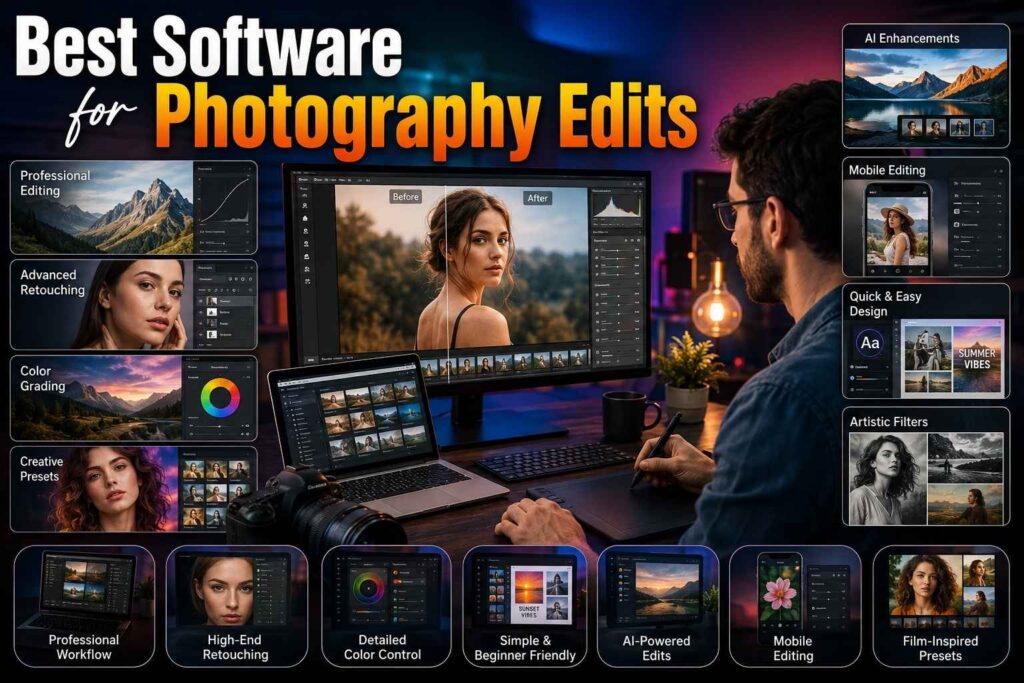
Best Software for Photography Edits
Professional photographers use different editing software depending on their workflow, photography niche, and editing style.
Adobe Lightroom
Adobe Lightroom is one of the most popular tools for professional photography edits. It is widely used for color correction, exposure adjustments, batch editing, and photo organization. Lightroom is especially useful for wedding, travel, and lifestyle photographers.
Adobe Photoshop
Photoshop is considered one of the most advanced image editing tools available today. It provides powerful retouching features, background editing, layer adjustments, and creative manipulation tools for professional photographers and designers.
Capture One
Capture One is known for its professional color grading and detailed image processing capabilities. Fashion and commercial photographers often prefer this software because of its advanced color control and high-quality editing performance.
Canva
Canva is a beginner-friendly editing platform designed for quick and simple photography edits. It is commonly used for social media graphics, content creation, and basic image enhancements.
Luminar Neo
Luminar Neo uses AI-powered image editing techniques to simplify complex editing tasks. It offers automated retouching, sky replacement, background enhancement, and creative tools for fast professional results.
Snapseed
Snapseed is a powerful mobile photo editing app developed for smartphone photographers. It includes professional editing tools such as selective adjustments, healing tools, filters, and color correction features.
VSCO
VSCO is popular for artistic photography edits and film-inspired presets. Many content creators and social media photographers use VSCO to create stylish and visually consistent edits.
Final Thoughts
Various artistic styles used in photo-editing enable photographers to enhance their creativity, enhance their storytelling, and establish a distinct visual identity. Each editing style can give rise to a different emotional response; examples include the cinematic edit style, natural retouching, and minimalism.
Professional photographers can apply various techniques to their images that can be considered fine art instead of only photographs. Vintage, dark, light, or high fashion retouches are all examples of how style and creativity must remain constant for a photographer’s success.
Photographers can develop a clear understanding of all current styles of photo-editing, as well as gain practical experience in professionally editing photos, to produce striking visual content that will draw attention and enhance brand equity and create a long-lasting impression.
TAGS
