

Why Blurry Photos Happen More Often Than You Think
When you’ve managed to capture the best moment possible to grow into a perfect picture, only to find it all blurry later, you’ve experienced one of the greatest frustrations in the photography world.
Blur affects many different types of pictures, including family pictures, portraits, products for websites, any picture from vacation and all have the ability to greatly diminish how great a photo something is. Sometimes, when a picture is taken, the cause for picture blur will be intentional; however, in other situations, the blur might not be something that was intended by the photographer. A picture that is blurry can be caused by several different things, such as camera shake, low light situations, incorrect focus settings, low-quality lenses, and/or problems created due to image compression; these are all common reasons for blurry images. An example would be when you take a picture, and it might not seem too blurry, but when you display it, some of the fine details could possibly not be readable or recognizable due to them being blurred, especially things like eyes, text, and/or objects.
The good thing about it is that with today’s technology of digital image processing, it would now be easier than ever to unblur images. With the advancements in editing techniques that utilize today’s many different programs as well as the current developments in artificial intelligence (AI), it is now more plausible to try to fix/blurr the image than it used to be.
What Does It Mean to Unblur a Picture?
When talking about unblurring images, it refers to the process of increasing the clarity of an image and recovering missing details caused by blurriness from motion, focus or in the original low-quality photo. In addition to making the image appear more normal and appealing, the goal of the unblurring process is to provide a clearer and/or crisper look to the image while still presenting it in its natural state.
Modern photographic enhancement products use advanced algorithms to investigate the image to regenerate lost detail, unlike typical sharpeners (e.g., using a little to boost edge contrast). This creates a more realistic image and decreases your chance of generating unrealistic artifacts.
Understanding Different Types of Blur
Not all blur is created equally. The type of blur affecting a photograph often determines how successfully it can be corrected.
Motion Blur
Motion blur occurs when either the camera or the subject moves during image capture. This is one of the most common causes of blurry photographs, especially in low-light situations.
Out-of-Focus Blur
A photo may appear blurry if the camera focuses on the wrong object or fails to achieve proper focus altogether. This type of blur can make subjects look soft and undefined.
Low-Resolution Blur
Images that have been compressed repeatedly or enlarged beyond their original size often lose sharpness. These photos may appear pixelated and lack detail.
Why People Want to Unblur Photos
Photographs often capture moments that cannot be recreated. Whether it is a wedding, birthday celebration, business event, or family gathering, blurry images can diminish the value of important memories.
Many individuals look for ways to unblur photos because they want to preserve these moments without sacrificing image quality. Businesses also rely on image clarity to maintain a professional appearance across websites, advertisements, and marketing materials.
Better Personal Memories
Family photographs and personal portraits become more meaningful when details are preserved. Clear images allow people to revisit important moments with greater visual quality.
Improved Professional Branding
Businesses frequently use portraits, team photographs, and promotional visuals online. A blurry picture can negatively affect credibility, while a sharp image creates a more professional impression.
Enhanced Social Media Content
Social media users understand that image quality directly impacts engagement. Clear and visually appealing photographs tend to attract more attention than low-quality alternatives.
How Modern Technology Helps Fix Blurry Photos
Image enhancement has evolved dramatically over the past few years. Traditional editing methods often required extensive manual adjustments, while modern solutions use artificial intelligence to automate many aspects of the restoration process.
When users attempt to fix blurry photos, advanced software analyzes image patterns, edges, textures, and facial features. The system then predicts missing details and restores sharpness in areas affected by blur.
AI-Powered Image Analysis
Artificial intelligence can examine millions of pixels simultaneously to identify areas where detail has been lost. This allows the software to apply corrections more accurately than conventional sharpening techniques.
Detail Reconstruction
Rather than simply increasing sharpness, modern AI systems rebuild details based on learned image patterns. This often produces more natural and visually pleasing results.
Noise Reduction and Enhancement
Blurred photographs frequently contain digital noise. Advanced enhancement tools can reduce noise while improving clarity, creating cleaner and more professional-looking images.
Common Causes of a Blurry Image
Understanding what causes blur can help photographers and everyday users avoid future problems.
Camera Shake During Capture
Even slight hand movement can affect image sharpness, particularly in low-light environments where slower shutter speeds are required.
Incorrect Focus Settings
Autofocus systems occasionally focus on the wrong subject, resulting in a blurry image even when the overall composition is excellent.
Poor Lighting Conditions
Insufficient lighting often forces cameras to make exposure adjustments that increase the likelihood of blur.
Digital Compression
Images shared across multiple platforms may lose detail due to repeated compression and resizing.
Fix Blurry Photos for Professional Use

Image quality plays a critical role in professional communication. Companies invest heavily in photography because visuals influence customer perception and brand credibility.
When businesses need to fix blurry photos, they often focus on:
- Team headshots and employee profiles
- Product photography for eCommerce
- Marketing and advertising materials
Improving image clarity helps create a stronger visual presence and enhances customer trust.
Best Practices When Trying to Unblur Photos
Although modern enhancement tools are powerful, certain practices can improve results significantly.
Start with the Highest Quality Original
The more image data available, the easier it is to restore lost details. Always use the original photograph whenever possible.
Avoid Excessive Sharpening
Over-processing can create halos and unnatural textures. Moderate adjustments generally produce more realistic outcomes.
Combine AI and Professional Editing
Automated enhancement tools are highly effective, but professional retouching can add the final refinements needed for exceptional results.
How Face Enhancement Helps Restore Portrait Images
Portrait photography presents unique challenges because facial details are often the most important element of the image. When faces appear blurry, the entire photograph can lose its impact.
Advanced face enhancement techniques can help restore eyes, skin texture, and facial contours while maintaining a natural appearance.
To learn more about professional facial retouching and portrait enhancement techniques, visit:
This resource provides additional insights into improving portrait quality and achieving more professional-looking results.
The Future of AI Image Restoration
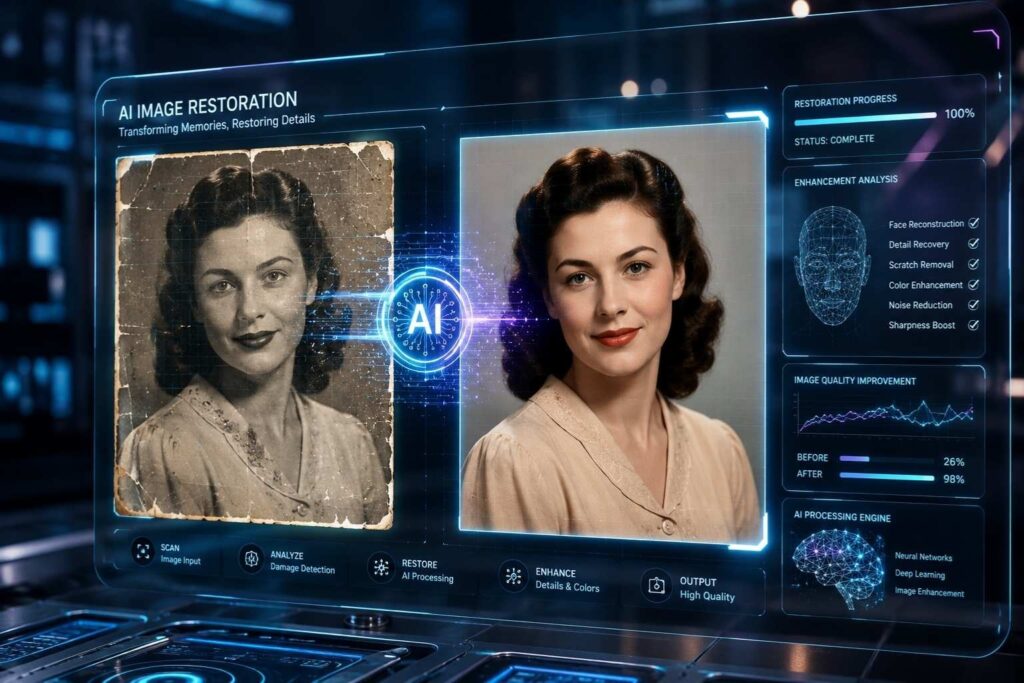
Artificial intelligence continues to transform image enhancement technology. Future developments are expected to provide even more accurate detail reconstruction, better facial restoration, and improved real-time image correction.
As these tools become increasingly sophisticated, users will gain greater control over how they restore and optimize photographs.
Conclusion
Unlocking the potential of blurry image files has never been easier due to new and improved technology, enabling Great Results using AI-based image-enhancing programs. You no longer need to hire a Professional Photographer for those pictures that were originally taken incorrectly; you just need some of the tools available online through various Websites or Applications for fixing images, i.e., using the latest Image Technology like “PhotoFixer,” etc.
The latest image-prerequisites have given end-users several options, including but not limited to the following:- Restoration Preservation, Preservation of Important Memories, and Lastly Improving Current Photography into Higher Quality, through new tools offered online!
TAGS
